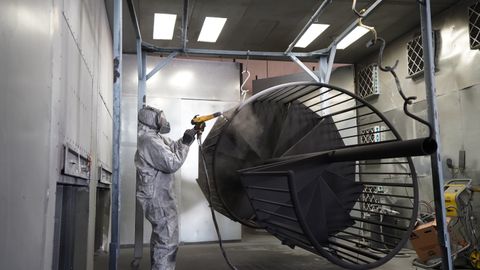
Protecting furniture legs, trim and panels in transit
How to wrap furniture legs, trim and small panels in cohesive kraft so no tape touches the finish, what to test first, and when corrugated or film is better.
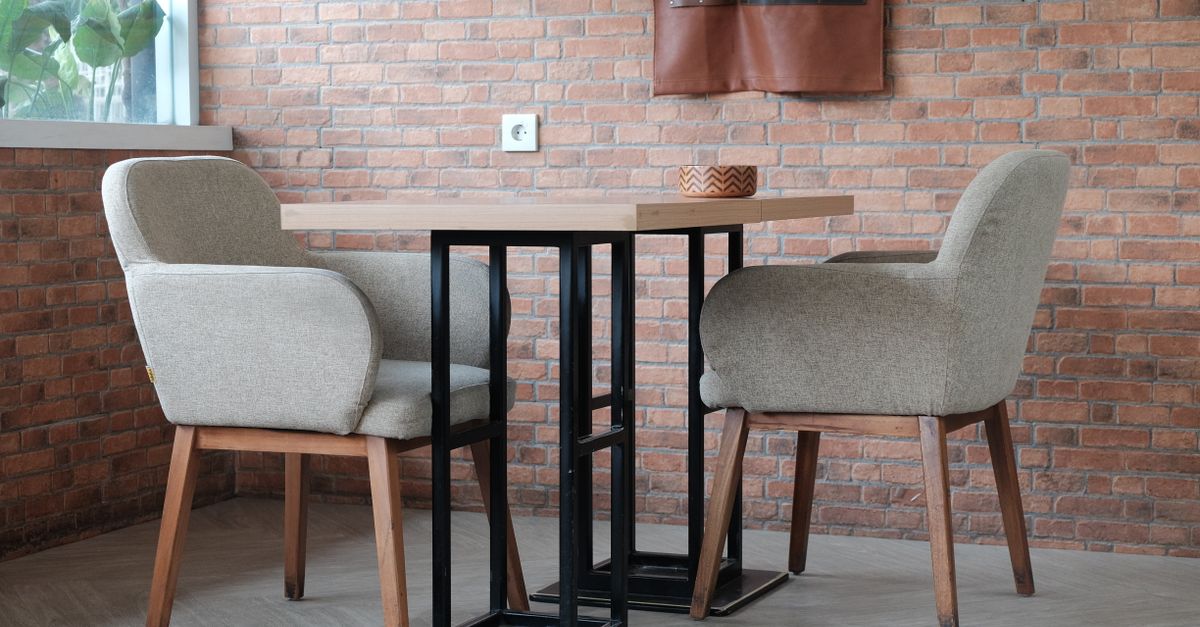
Think about where a chair actually touches things inside a carton. It is the legs, the edges and the strips of trim. Those parts press on the carton walls and on the next piece, so that is where the scuffs show up.
My short answer: wrap each leg, trim strip and small panel in cohesive (self-seal) kraft. The paper closes on itself when you press it, so the wrap goes on in one step and no tape ever touches the lacquer, veneer or metal. It is a cover against scuffs and dust, not padding. Add corner boards for edges, corrugated wrap for legs that stick out of the box, and a proper cushion for glass.
Checked against sources on 29 October 2026.
We make this paper in Jaipur. Our coating line lays a natural rubber latex cohesive on plain kraft, and our slitters cut it to the width a buyer needs. Furniture is one of the two uses our product page names, next to automobile spare parts.
Why tape is the real problem on finished furniture
Tape is perfectly fine on a corrugated carton. On a finished, decorative surface it is a risk, because a tape adhesive is made to grab whatever it touches. Peel it off a lacquered leg after a long, hot trip and it may lift the finish or leave a line of glue.
Cohesive paper works on a different idea. Its coating is made to bond only to another coated face. Packaging Products (Coatings) Ltd, a UK coater of this paper, says on its cold seal page that it sticks to itself and not to the product, leaves no residue when it is opened, and is used as a "quick furniture wrap" in the furniture trade.
That is the whole appeal for a furniture manufacturer.
One material does the covering and the closing, and nothing sticky sits on the finish.
Who sells it for furniture
These are uses that sellers and makers name on their own pages.
- LP Aubut, a Quebec distributor, sells its cohesive paper in 700 ft rolls for protecting furniture legs and other narrow items, in widths of 5, 6, 7.5, 10, 15 and 30 inches (product page, in French).
- Pregis lists indoor and outdoor furniture for its cohesive paper and linerboard, and cabinet trim for its cohesive single-face corrugated.
- iPack, a US distributor, lists cabinetry and millwork, doors, panels and drawers, and trim and moulding.
- American Printpak in Wisconsin recommends its cohesive kraft for wrapping furniture.
- In Switzerland, Coplax sells the corrugated version to keep table and chair legs from scratches (Coplax, in German). Medewo's German-language glossary names chair and table legs too.
So furniture is a listed use for the flat paper in North America and the UK, and for the corrugated version in Switzerland and Austria.
Wrapping a leg the right way
Here is the mistake that is easiest to make. A spiral wrap, the way you would wind stretch film, does not hold on paper coated on one face. Each new turn lays its coated face on the plain back of the turn before, and nothing bonds.
Use a fold-and-press wrap instead. I would train every packer on it before the first dispatch.
- Find the coated face. Press two offcuts together in different ways, and the faces that bond are the coated ones.
- Cut a piece about 25 mm longer than the leg at each end, and wide enough to go round the leg with about 25 mm left over to seal. Hisago, a Japanese seller, asks for at least about that much pressed seal around the contents.
- Lay the leg on the coated face and fold the paper over it.
- Press the two long edges together into a flat seam that runs along the leg.
- Press the ends closed. On a leg that is fixed to the frame, gather the top end round the leg and press the coated faces together there as well.
- Fold the seam flat against the leg so it does not catch on the carton.
- For flat-pack furniture, wrap each loose leg and each piece of trim on its own before it goes in the box.
I expect a trained packer to finish this faster than a tape-and-paper wrap, because there is no tape to find, cut or smooth down. Still, measure it on your own bench before you believe me.
Trim, doors and panels
Trim and moulding strips suit the same fold-and-press wrap. They are light, and the finish is the only thing that can go wrong with them. Cut the piece a little longer than the strip and seal both ends.
Doors, drawer fronts and panels are a different matter. A full wrap needs paper bigger than the panel, with seal room on every side. On a 600 mm or 15 inch roll that works for a drawer front. For a large door or a table top, I would use cohesive corrugated sheets, a wider wrap, or surface protection film.
Edges and corners need more than paper. A wrap stops scuffs, but it does not stop a corner from being crushed when the carton is dropped. Add corner boards, and our guide to edge protectors and corner boards explains how to choose them.
Finishes to test before you switch
Stockists say cohesive paper leaves no residue. Our own product page still asks buyers to test a sample on very glossy, painted or polished surfaces before they change over a whole line, and I agree with that advice.
For furniture I would add two more to the test list. Hisago warns against wrapping PVC goods and long-pile items directly. Furniture has plenty of both, in PVC edge banding, vinyl and leatherette upholstery, and velvet.
The test takes about a week of waiting and very little work. It is written out step by step in our guide on whether cohesive paper leaves residue.
Paper, corrugated, film or corner boards?
Each of these does a different job. I would choose by the job and the finish, not by habit or by what the store already holds.
| Need | Best fit | Why |
|---|---|---|
| Scuff and dust cover for legs and trim inside a carton | Flat cohesive kraft | Thin, quick, closes without tape |
| Legs that stick out of the carton or travel loose | Cohesive corrugated wrap | The flutes take knocks that paper cannot |
| Edges and corners of tops and cabinets | Corner boards, with a wrap | Paper does not stop a corner being crushed |
| A high-gloss panel that is cut, fitted or stored for months | Surface protection film | It stays on through the work and peels off later |
| Glass shelves, mirrors and glass tops | Cushioning such as honeycomb paper or bubble wrap | Self-seal paper gives no cushioning |
Film deserves a fair word. For a panel that goes through a cutting or fitting step, or sits in a showroom for months before sale, film is often the better answer than paper. It has its own tack to choose and its own test to run, covered in our guide to choosing surface protection film.
Choosing the width
Pick a roll width that covers one side of the piece you are cutting: either the leg's length plus the two end seals, or its girth plus the long seal. Cut the other side from the roll's length.
Rolls come in two systems. North American rolls are 700 ft long, in widths from 5 to 30 inches. In the UK and Europe, rolls are 200 m long and widths are given in millimetres.
We cut both. Our North American widths are 6, 7.5, 10 and 15 inch on rolls of about 705 ft, and our European rolls are 300 and 600 mm wide and 200 m long. Each roll is wound on a 3-inch (76 mm) core. Other widths can be slit on request. The paper itself we have made at 65 and 80 GSM, and those are the two weights I can speak for.
You can see the sizes and ask for a quote on Jagannath Polymers' self-seal paper page.
On the packing bench
The coating is natural rubber latex. Our product page asks that packers with a latex allergy wear gloves, and that you check the paper suits your workplace first.
After delivery, the wrap goes in with paper and cardboard for recycling, and we sell it as 100% recyclable on that basis. It is also biodegradable, because the base is plain kraft paper. If your customers ask what to do with the packaging, that is a simple answer to give them.
What to do next
I would start small, with legs and trim, because they are the easiest place to see a difference.
- Pick the one product that brings the most finish complaints.
- Wrap its legs and trim in cohesive kraft, and put corner boards on its edges.
- Run the residue test on its finishes, especially gloss, PVC and fabric.
- Send a few by your normal route and ask the receiver for photos of the opened pieces.
- Compare the complaints over the next few dispatches before you change every product.
Tell us the leg size, the finish and how your furniture travels through our contact page. We will suggest a width to try first.
Questions buyers ask
Will wrapped legs stick to the carton or to each other?
No. Only a coated face bonds to another coated face, so the outside of each wrap behaves like plain paper. The flip side is that wrapped pieces can slide, so fill the gaps in the carton.
Can I wrap upholstered or fabric-covered legs?
Test first, and keep it off long-pile fabric. Hisago, a Japanese seller of cohesive kraft, warns against wrapping long-pile items, rubber and PVC goods directly. If a test shows marks, put a sheet of plain paper between the fabric and the cohesive wrap.
Is cohesive paper enough for outdoor furniture?
For the trip it can be, as long as the pieces are not fragile. Pregis lists outdoor furniture among the uses of its cohesive paper. Ours is water-resistant, but it is still paper, so do not count on it to keep rain off an open truck. Cover the load as you would anyway.